


How Does Furniture Manufacturing Work in India?
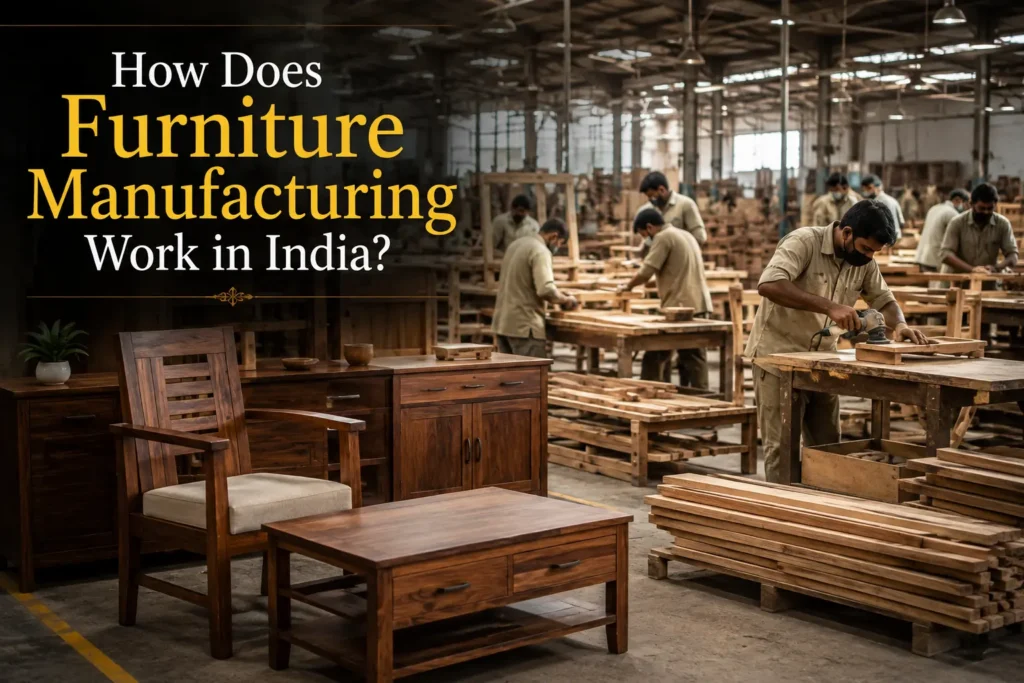
If you're evaluating India as a sourcing destination, it helps to actually understand how furniture gets made there before you commit to an order. Manufacturing in India doesn't look like the fully automated, assembly-line model many buyers picture when they think of large-scale furniture production elsewhere. It's a different process, built around a different set of strengths, and understanding that process is often what separates buyers who source successfully from those who run into delays or quality surprises.
This guide walks through how furniture manufacturing actually works in India, from raw material sourcing to the container leaving port, so you know what to expect at each stage.
Why Understanding the Furniture Manufacturing Process Matters Before You Order
A lot of first-time buyers treat sourcing as simply picking a product from a catalog and placing an order, but furniture manufacturing is a multi-stage process, and knowing what happens at each stage helps you ask better questions, spot a reliable manufacturer, and set realistic expectations for timelines and quality.
The Furniture Manufacturing Process in India
Step 1: Raw Material Sourcing
Furniture manufacturing in India typically begins with sourcing raw materials, most commonly solid wood species like mango wood, sheesham (Indian rosewood), acacia, and teak, along with metal, glass, and upholstery materials depending on the product.
Wood sourcing in India is regionally specific. Mango wood, for example, is widely available as a byproduct of mango orchards once trees stop bearing fruit efficiently, which is part of why it's become a popular, relatively sustainable choice for furniture manufacturers. Reputable manufacturers will be able to explain where their wood comes from and, increasingly, provide sustainability or certification documentation for buyers who need it.
Step 2: Design and Specification
Once materials are sourced, the design stage begins. This can mean one of two things depending on the type of order:
Standard catalog furniture, where the manufacturer already has established designs, dimensions, and finishes ready to produce at scale.
Custom or private label furniture, where the buyer provides specifications — dimensions, finish, hardware, branding requirements — and the manufacturer's design team translates that into a workable production plan.
This stage is where communication quality between buyer and manufacturer matters most. Miscommunication here is one of the most common causes of production delays or finished products that don't match expectations.
Also Read: Furniture Directly from Manufacturers or Through Traders?
Step 3: Wood Preparation and Seasoning
Before wood can be shaped into furniture, it needs to be properly seasoned — dried to an appropriate moisture content so the finished product doesn't warp, crack, or shrink after it reaches a buyer's climate, which is often very different from India's.
This typically involves kiln drying, a controlled process that brings the wood's moisture content down to a stable level. Skipping or rushing this stage is one of the more common corners cut by lower-quality manufacturers, and it's a major cause of furniture quality complaints reported by international buyers months after delivery.
Step 4: Cutting, Joinery, and Construction
Once the wood is properly seasoned, it moves into cutting and construction. This is where India's furniture manufacturing tradition tends to differ most from highly automated hubs. A significant amount of Indian furniture manufacturing, particularly for solid wood pieces, still involves skilled hand joinery alongside machine cutting — techniques like mortise-and-tenon joints that have been used in the region's woodworking tradition for generations.
Step 5: Finishing
After construction, furniture goes through finishing — sanding, staining, sealing, painting, or distressing, depending on the intended look. Finishing is also where a lot of customization happens for private label buyers, since finish color and texture are often the easiest elements to adjust without altering the core manufacturing process.
Quality finishing work directly affects durability, not just appearance — a properly sealed piece resists moisture and temperature changes far better than one with a rushed finish, which matters significantly once the furniture reaches climates different from where it was made.
Step 6: Quality Control and Inspection
Reputable manufacturers run quality checks at multiple stages, not just at the end. This typically includes checking wood moisture content after seasoning, verifying joinery strength, checking finish consistency, and confirming dimensions match specification before packing.
For international buyers, it's worth asking whether the manufacturer conducts in-house quality control, allows third-party inspection, or provides photo and video documentation before shipment.
Step 7: Packaging for Export
Export packaging is a distinct skill from manufacturing itself. Furniture needs to survive weeks of ocean freight, handling at multiple ports, and container loading without damage. This usually involves protective wrapping, corner guards, and sturdy export-grade cartons or crating for higher-value pieces.
Wooden packaging materials also need to meet ISPM-15 fumigation standards for international shipping — a requirement that trips up buyers working with less experienced exporters who aren't familiar with the documentation international customs authorities expect.
Step 8: Documentation and Compliance
Before a shipment leaves India, manufacturers handle export documentation — commercial invoices, packing lists, certificates of origin, and any compliance certifications relevant to the buyer's country, such as fumigation certificates or, increasingly, sustainability documentation like FSC certification.
Manufacturers with strong export experience to a buyer's specific country will already understand what documentation that country's customs process expects, which meaningfully reduces the risk of delays at the port of entry.
Step 9: Shipping and Logistics
Once packed and documented, furniture is loaded into containers — full container load (FCL) for larger orders, or less than container load (LCL) for smaller ones — and shipped by ocean freight to the buyer's destination port. Transit time varies by destination but commonly runs several weeks, on top of the production time already spent on manufacturing.
From there, the shipment goes through customs clearance in the buyer's country before final delivery to a warehouse, showroom, or distribution point.
Also Read: How Long Does It Take to Ship Furniture from India to the UK/USA?
What Makes Indian Furniture Manufacturing Distinct
A few characteristics come up repeatedly when comparing India's manufacturing process to other major furniture-producing countries:
Craftsmanship-driven production - The continued role of skilled hand joinery alongside machine work gives Indian solid wood furniture a distinct quality and character that fully automated production doesn't replicate.
Material specialization - India's furniture industry has particular strength in solid wood species like mango wood, sheesham, and acacia, rather than trying to compete broadly across every material category.
Flexibility for customization - The production isn't fully standardized around mass automation, manufacturers are often more willing to accommodate custom order, which suits private label and boutique retail buyers well.
Longer, more hands-on production timelines - The tradeoff for craftsmanship and flexibility is generally a longer production cycle than fully automated manufacturing hubs offer for standardized products.
Build Your Furniture Range with Vandana International
If this overview of India's manufacturing process has you considering a supplier, Vandana International follows the same craftsmanship-driven approach described above — kiln-dried solid wood, skilled joinery, and finishing done in-house rather than outsourced across multiple subcontractors.
A few things buyers evaluating a supplier can expect when working with Vandana International:
- Solid wood specialization in mango wood, sheesham, and acacia — the same materials covered in this guide, sourced and seasoned before construction begins
- In-house quality control at each production stage, from wood seasoning through to final finishing, rather than a single check before shipping
- Bulk production — Suitable for retailers, wholesalers, hotels, restaurants, interior designers, and commercial projects requiring bulk orders or container-volume orders.
- Export-ready compliance, including fumigation certification for wooden packaging and documentation suited to international customs requirements
- International supply — Support for buyers sourcing furniture for markets including the USA, Germany, Netherlands, Belgium, Denmark, Spain, Australia, and other countries.
If you are planning a wholesale furniture order from India, you can share your product requirements, quantities, designs, and destination with Vandana International to discuss manufacturing and pricing.
You Can Also Read More About: Best Furniture Categories to Import from India in 2026
Frequently Asked Questions
1. How long does furniture manufacturing take in India?
Production timelines vary by order size and customization level, but a realistic range for most bulk or private label orders is 30-60 days for manufacturing, not including shipping time afterward.
2. Is Indian furniture manufacturing automated or handmade?
It's typically a blend of both — machine cutting and processing combined with skilled hand joinery and finishing, particularly for solid wood furniture, rather than a fully automated process.
3. What wood is most commonly used in Indian furniture manufacturing?
Mango wood, sheesham (Indian rosewood), and acacia are among the most widely used solid wood species, chosen for their durability, grain character, and relative material availability.
4. Can I customize furniture when sourcing from India?
Yes, many manufacturers offer customization of dimensions, finishes, hardware, materials, and design details for bulk orders.
5. How do I verify furniture manufacturing quality before ordering in bulk?
Request physical samples before a full order, ask about the manufacturer's quality control process at each production stage, and consider a third-party pre-shipment inspection for larger orders.