


Acacia Wood vs Mango Wood — Which Is Better for Wholesale Furniture?
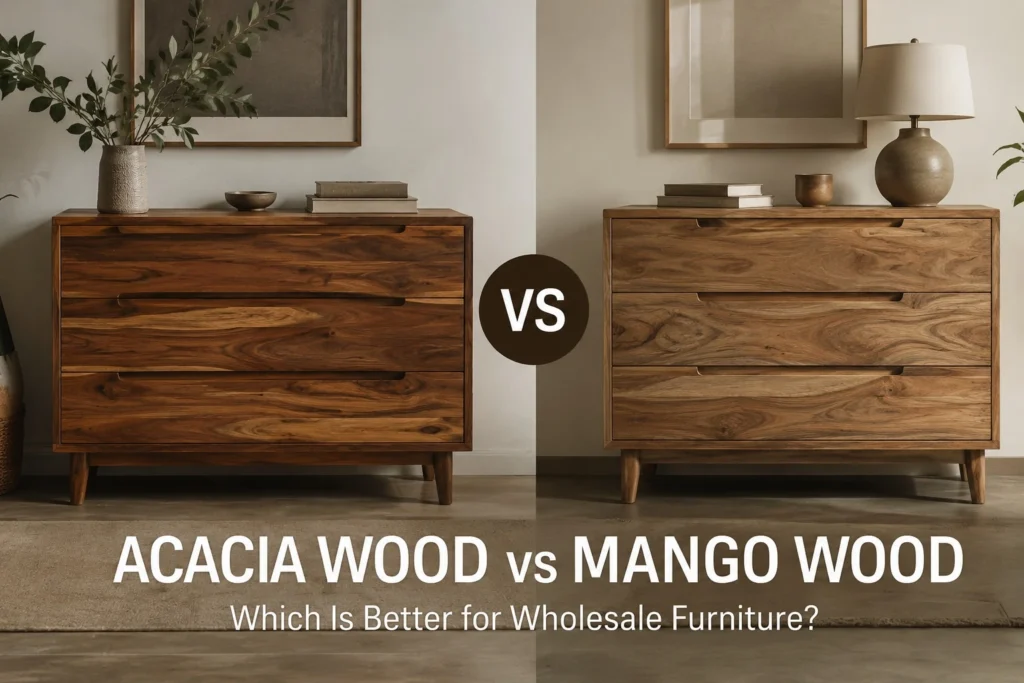
For furniture retailers, importers, distributors, and hospitality buyers, choosing the right wood is more than a design decision. The material affects product durability, wholesale pricing, appearance, customization, positioning, and customer expectations.
Two of the most widely used options in Indian furniture manufacturing are acacia wood and mango wood. Both are solid hardwoods, both can produce attractive export-quality furniture, and work well for different product categories. The better choice depends on what you are selling, where you are selling it, and the price point you want to achieve.
For international buyers in the USA, Germany, Netherlands, Belgium, Denmark, and Spain, understanding the practical difference between the two can make bulk sourcing decisions much easier.
Mango Wood vs Acacia Wood: The Quick Answer
If your priority is competitive wholesale pricing, design flexibility, natural character, and scalable production, mango wood is an excellent choice.and if your priority is higher hardness, strong wear resistance, premium grain, and heavy-use furniture, acacia wood generally has the advantage.
Neither material is automatically better for every furniture collection. The right choice depends on the product and your target customer.
|
Factor |
Mango Wood |
Acacia Wood |
|
Durability |
Very good |
Excellent |
|
Hardness |
Medium hardwood |
Generally harder |
|
Appearance |
Warm, varied grain |
Bold, dramatic grain |
|
Price positioning |
Competitive |
Mid to premium |
|
Customization |
Excellent |
Very good |
|
Bulk production |
Excellent |
Excellent |
|
Best for |
Versatile collections |
Heavy-use & premium pieces |
|
Sustainability story |
Strong |
Depends on responsible sourcing |
Understanding Acacia Wood for Wholesale Furniture
Acacia is a popular hardwood for furniture because of its strength, density, and distinctive natural grain.
One of its biggest advantages for furniture businesses is visual character. Acacia can feature contrasting tones and pronounced grain patterns that make each piece look naturally different. That can be particularly useful for retailers selling dining tables, benches, coffee tables, and other larger furniture pieces where the surface itself contributes significantly to the product's appearance.
Why B2B buyers choose acacia furniture
Acacia can be a strong choice when a business wants:
- A premium solid-wood appearance
- Strong resistance to everyday wear
- Distinctive natural grain
- Durable dining furniture
- Statement pieces for retail collections
- Furniture for busy commercial environments
- Higher-value product positioning
For a retailer, this means acacia can work particularly well in collections where the natural material is part of the selling proposition.
Best Furniture Products for Acacia Wood
Acacia is particularly suitable for products that combine visual impact with regular use.
Popular applications include:
- Dining tables
- Dining benches
- Coffee tables
- Console tables
- Sideboards
- Cabinets
A large acacia dining table, for example, can become a feature product in a furniture showroom because the natural grain provides visual differentiation without requiring complicated decoration.
Understanding Mango Wood for Wholesale Furniture
Mango wood occupies a different position in the furniture market.
It offers a warm natural appearance and can be manufactured into a wide variety of furniture styles. Its versatility makes it particularly useful for businesses that want to build a broad collection rather than focus exclusively on premium statement furniture. Mango wood can be finished in natural, stained, painted, distressed, or other decorative finishes depending on the product design and manufacturer's capabilities.
Why buyers choose mango wood
Mango wood can be attractive for businesses looking for:
- Competitive wholesale pricing
- Solid wood construction
- Flexible designs
- Different finish options
- Large furniture collections
- Custom order manufacturing
- Mid-market retail positioning
- A wide range of furniture categories
This versatility is one of the biggest commercial advantages of mango wood.
Best Furniture Products for Mango Wood
Mango wood can be used across a broad range of indoor furniture, including:
- Wardrobes
- Beds
- Bedside tables
- Chest of drawers
- Bookshelves
For businesses building complete bedroom or living room collections, mango wood can provide a consistent material platform across multiple products.
The Real Difference for Wholesale Buyers
For B2B buyers, the comparison becomes more interesting when you move beyond basic durability.
1. Product Positioning
The wood you choose influences how the furniture can be presented to customers.
Acacia's pronounced grain can support a premium and natural-material positioning. Mango wood can provide a solid-wood product at a broader range of retail price points. This does not mean every acacia product needs to be expensive or every mango product needs to be budget-focused.
2. Price and Margin
Wholesale buyers need to look at the complete product cost rather than comparing wood prices alone.
Your final buying price can depend on:
- Wood specification
- Product size
- Design complexity
- Finishing
- Hardware
- Production quantity
- Packaging
- Customization
- Container utilisation
Mango wood can be attractive for retailers who need competitive pricing across a larger collection. Acacia may make more sense when the higher material value can be reflected in the retail price.
A simple B2B approach
If your customers are highly price-sensitive, mango may give you greater flexibility and if your customers are looking for premium solid-wood furniture and are willing to pay for distinctive material, acacia can offer stronger positioning.
Which Wood Works Better for Different Furniture?
Instead of giving one answer for the entire industry, it makes more sense to look at individual categories.
Dining Tables
Acacia: Excellent for premium dining tables where grain and durability are selling points.
Mango: Suitable for retailers looking for attractive solid-wood dining tables at competitive price points.
Bedroom Furniture
Mango: A particularly practical option for beds, wardrobes, bedside tables, and storage furniture because it can be used across an entire bedroom collection.
Acacia: Better suited when the buyer wants a more premium appearance or distinctive grain.
Coffee Tables
Both materials can work well.
Acacia can make the natural grain the focal point, while mango allows greater flexibility across different designs and finishes.
Sideboards and Cabinets
Mango is useful for broader collections because it can be produced in numerous styles.
Acacia is attractive for statement cabinets where the wood grain contributes heavily to the product's appearance.
Hotel Furniture
The application matters more than simply choosing a species.
For heavily used tables and commercial areas, acacia can be an attractive option. For guest-room furniture, consoles, bedside tables, and decorative pieces, mango can provide a good balance between appearance and cost.
Also Read: Where to Buy Wholesale Furniture in Bulk
Acacia vs Mango Wood: What About Customization?
Customization is one area where B2B buyers should look beyond the material.
When purchasing directly from a manufacturer, buyers may be able to customize:
Dimensions
Adjust the width, height, or depth to suit a particular market or project.
Finishes
Choose natural, stained, painted, distressed, or other finishes depending on the product.
Hardware
Handles, knobs, hinges, pulls, and other fittings can sometimes be changed to match a collection.
Design details
Leg profiles, door patterns, panel styles, table shapes, and other elements can be modified.
Branding and packaging
Private label buyers may also require branded labels, product cards, packaging, barcodes, or specific carton markings.
For retailers developing their own furniture collection, this flexibility can be more valuable than the difference between the two woods themselves.
Which Markets Prefer Which Material
Based on what our buyers across all six target countries consistently order, here is the honest picture:
USA
Mango wood is the dominant seller across most furniture categories. The warm grain, strong sustainability story, and competitive FOB pricing make it the most commercially effective material for the US mid-market residential furniture segment. Acacia performs well in commercial hospitality procurement and the premium residential segment.
Netherlands
Both materials sell strongly. Mango wood leads in volume because the sustainability narrative resonates well with Dutch buyers. Acacia performs strongly in the premium design-focused segment where bold grain and material weight are part of the product's appeal.
Germany
Acacia is relatively stronger here than in other markets. German buyers tend to prioritise material quality and structural solidity, and acacia's hardness and bold grain character align with that preference. Mango wood sells well in the mid-market but acacia has a stronger premium positioning in German retail.
Belgium
Similar to the Netherlands. Mango wood leads on volume, acacia leads on premium positioning. Rattan-combined designs in both materials perform strongly in the Belgian home decor retail segment.
Denmark
Scandinavian design sensibility favours clean-grain, minimal-pattern natural wood. Mango wood's varied, warm grain performs well in the contemporary Danish interior market. Acacia performs well where a bolder, more statement material is wanted.
Spain
Mango wood dominates the mid-market residential segment. Acacia performs well in boutique hotel furniture procurement and premium residential interior design supply, where the material's visual drama suits the contemporary Mediterranean aesthetic.
You Can Also Read More About: Mango Wood vs Sheesham Wood
FAQs
Q: Is acacia wood stronger than mango wood?
Yes, acacia sits significantly higher on the Janka hardness scale — around 1700 to 2300 compared to mango wood's 1070 to 1170. Acacia is more scratch and dent resistant and better suited to high-traffic commercial use.
Q: Which wood is better for wholesale furniture — acacia or mango?
It depends on your market and use case. Mango wood offers better value, broader residential market appeal, and a stronger sustainability story. Acacia offers harder construction, bolder grain, and better performance in commercial environments. Most wholesale buyers carry both.
Q: Is mango wood sustainable?
Yes, mango wood is harvested from trees at the end of their fruit-bearing agricultural life — trees that would otherwise be discarded. This gives it a genuine eco-friendly credential that resonates particularly well with buyers in the Netherlands, Germany, Belgium, and Denmark.
Q: Which wood is cheaper for wholesale orders from India?
Mango wood is typically 10 to 20 percent less expensive than acacia at comparable FOB pricing from Jodhpur. The price difference reflects acacia's greater hardness and the higher processing cost of a denser material.
Q: Can I mix acacia and mango wood furniture in one container order?
Yes — and most of our wholesale buyers do exactly this. Mixing both materials in one container gives you broader market coverage across price points and retail segments without needing to source from multiple suppliers.