


If you run a furniture retail business, an interior design firm, or manage a hospitality procurement chain, you already know how frustrating it can be to source quality furniture at scale. The cost of factory visits, the language barriers, the endless back-and-forth on samples — it adds up fast, and when your business depends on reliable bulk furniture imports, you simply cannot afford to get it wrong.
Here's the thing: thousands of B2B buyers worldwide source furniture from India every year — and a growing number of them have never stepped foot in a factory. They have found a smarter way. In this guide, we break down exactly how you can source bulk furniture from India, specifically from Jodhpur's legendary manufacturing belt, without ever booking a flight — and why working with the right export partner makes all the difference.
Why India is the Right Source Furniture Market for B2B Buyers
India is one of the world's top furniture manufacturing and export destinations. The country combines skilled artisanship, access to high-quality raw materials like mango wood, sheesham, and iron, and production capacities that can comfortably handle large-volume orders. For international importers and wholesale furniture buyers, that combination is hard to beat.
Within India, Jodhpur — often called the "Craft Capital of India" — is the epicenter of furniture exports. The city has a deeply rooted tradition of woodworking and ironcraft, and its manufacturers have been supplying retailers, interior designers, and distributors across the USA, UK, Europe, and Australia for decades.
Key reasons B2B buyers prefer sourcing furniture from India:
- Competitive factory-gate pricing on wooden and iron furniture
- Highly skilled craftspeople producing handcrafted, durable pieces
- Access to sustainably sourced mango wood and reclaimed timber
- Flexible custom order options: sizes, finishes, colors, and hardware
- Established FOB and CIF export infrastructure for container shipping
- Growing compliance with international quality standards
Step-by-Step Process to Source Furniture from India Without Visiting the Factory
1. Start with Thorough Supplier Research
The first step in sourcing furniture remotely is identifying a trustworthy manufacturer. Rather than focusing only on pricing, buyers should evaluate suppliers based on their manufacturing capabilities, export experience, product range, and communication standards.
Before proceeding, review:
- Company website
- Product catalogs
- Export experience
- Certifications and compliance standards
- Client testimonials
- Social media presence
- Business registration details
A professional furniture manufacturer will maintain transparency and provide detailed information about their operations.
2. Request Digital Catalogs and Product Information
A detailed product catalog can provide valuable insight into a manufacturer's capabilities.
Most professional furniture suppliers provide:
- Product dimensions
- Material specifications
- Finish options
- Packaging information
- Production timelines
- Customization possibilities
Reviewing catalogs carefully allows buyers to compare product quality and determine if the supplier aligns with their market requirements. For retailers and wholesalers, this step also helps identify best-selling collections suitable for local demand.
Read More About: How Can You Avoid Scams When Importing Furniture from India?
3. Schedule Virtual Factory Tours
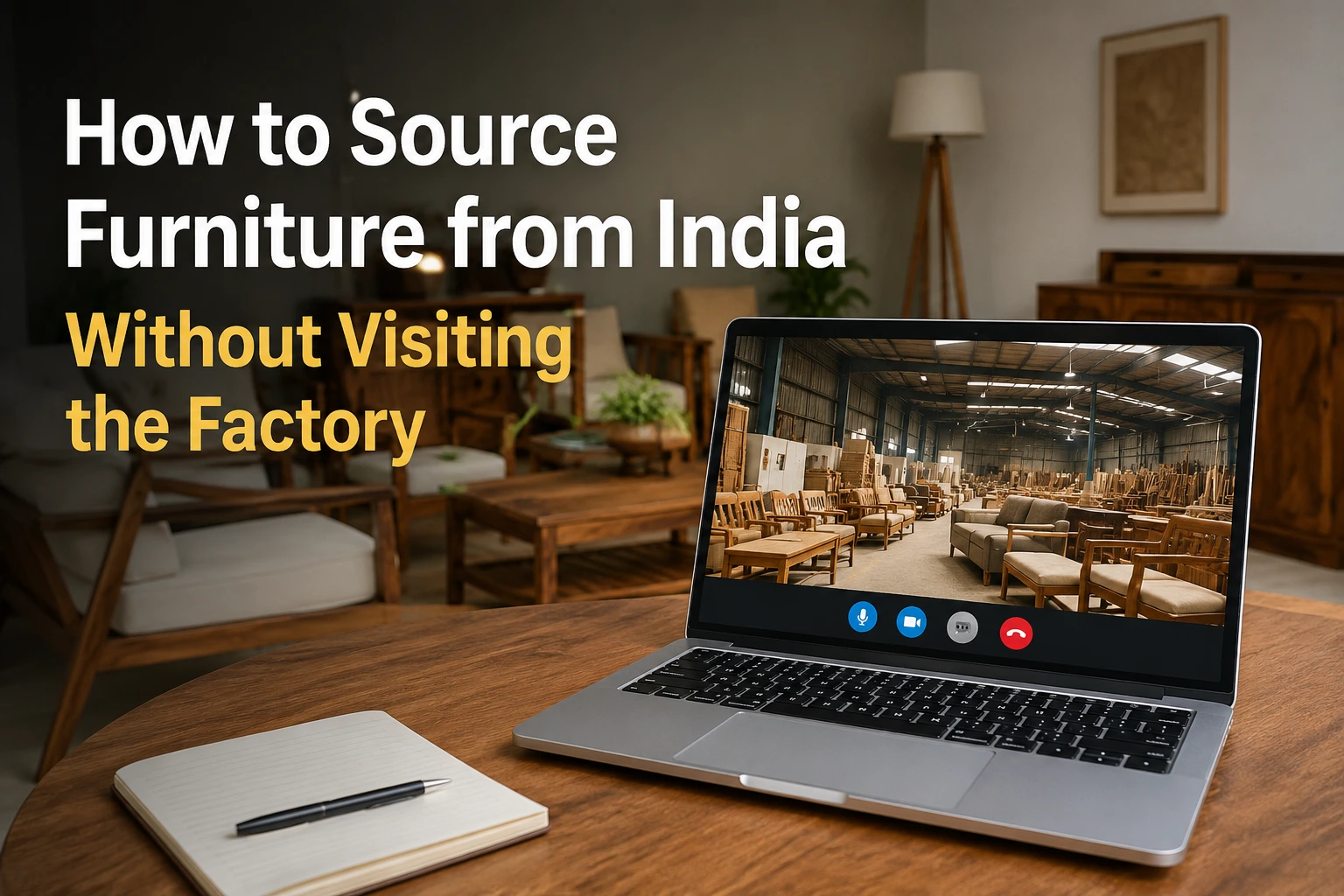
One of the most effective alternatives to an in-person visit is a virtual factory tour. Many furniture manufacturers now offer live video walkthroughs using platforms such as Zoom, Google Meet, or Microsoft Teams.
During a virtual factory tour, buyers can evaluate:
- Manufacturing facilities
- Production processes
- Machinery and equipment
- Workforce capabilities
- Material storage areas
- Packaging facilities
- Finished product inventory
A live tour often reveals more about a supplier's professionalism than a static website or brochure.
4. Always Request Product Samples
Even if a supplier appears reliable, requesting samples remains one of the most important steps in the sourcing process.
A sample allows buyers to inspect:
- Material quality
- Construction standards
- Finish consistency
- Hardware quality
- Packaging methods
- Overall craftsmanship
For furniture retailers and distributors, product samples provide confidence before committing to larger orders. The cost of a sample is often insignificant compared to the potential risks of placing a large bulk order without verification.
5. Evaluate Communication Responsiveness
Communication quality is one of the strongest indicators of supplier reliability.
Professional furniture manufacturers should be able to provide:
- Timely responses
- Detailed quotations
- Production updates
- Clear documentation
- Transparent pricing structures
Poor communication during the quotation stage often becomes a larger issue once production begins. For international buyers, a responsive supplier can significantly reduce sourcing challenges and improve project management.
6. Verify Manufacturing Capacity
One common mistake made by buyers is assuming that every supplier can handle large orders.
Before placing a purchase order, verify:
- Monthly production capacity
- Workforce size
- Manufacturing lead times
- Export volume
- Existing client base
Businesses sourcing furniture in bulk need suppliers that can scale production without compromising quality or delivery schedules. This becomes especially important for retailers, hospitality projects, and large distribution networks.
7. Understand Material Specifications
Furniture quality depends heavily on material selection.
Professional manufacturers should clearly explain:
- Wood species used
- Moisture content
- Finishing methods
- Hardware specifications
- Upholstery materials
- Structural construction techniques
For example, furniture produced using mango wood, acacia wood, or engineered materials may serve different market segments and price points. Understanding these details helps buyers make informed purchasing decisions.
8. Use Third-Party Inspection Services
For larger orders, independent inspection agencies can provide an additional layer of security.
Third-party inspectors can evaluate:
- Product quality
- Production progress
- Quantity verification
- Packaging standards
- Compliance requirements
Many international buyers use inspection services before final shipment to ensure products meet agreed specifications. This approach provides confidence without requiring overseas travel.
9. Review Packaging Standards Carefully
Furniture can be damaged during international transit if packaging is inadequate.
Before approving production, request information regarding:
- Carton specifications
- Protective wrapping
- Corner protection
- Palletization methods
- Container loading procedures
Experienced furniture exporters understand the importance of secure packaging and invest in protecting products throughout the shipping process.
10. Confirm Export Experience
Exporting furniture requires more than manufacturing expertise.
Your supplier should also have experience handling:
- Export documentation
- Customs procedures
- International shipping
- Container planning
- Compliance requirements
A manufacturer with proven export experience can significantly simplify the sourcing process for international buyers.
Why Vandana International is a Reliable Furniture Sourcing Partner
For businesses looking to source furniture from India without visiting the factory, choosing the right manufacturing partner is essential.
Vandana International works with retailers, distributors, importers, interior designers, and hospitality buyers across international markets. Our focus on quality manufacturing, transparent communication, export-ready operations, and reliable bulk supply helps buyers source furniture confidently from anywhere in the world.
From product selection and sample approvals to production updates and international shipping support, we provide a streamlined sourcing experience designed specifically for B2B buyers.
Conclusion
Sourcing furniture from India without visiting the factory is not only possible—it has become standard practice for many successful global businesses. The key is following a structured sourcing process that includes supplier verification, virtual factory inspections, sample evaluations, quality checks, and clear communication.
When these steps are followed carefully, buyers can confidently place bulk furniture orders, reduce sourcing costs, and build long-term partnerships with reliable manufacturers.
You Can Also Read More About: How Do You Find Reliable Furniture Manufacturers in India?
FAQs
1. How can I verify a furniture manufacturer remotely?
You can review the company's website, export experience, certifications, client reviews, product catalogs, and request a live virtual factory tour before placing an order.
2. What should I look for when choosing a furniture supplier in India?
Look for manufacturing capability, export experience, product quality, communication responsiveness, production capacity, and the ability to handle bulk orders consistently.
3. Can Indian furniture manufacturers handle large-volume orders?
Yes, established manufacturers like Vandana International are equipped to manage bulk production while maintaining consistent quality and delivery schedules.
4. What information should be included in a furniture quotation?
A professional quotation should include product specifications, materials, dimensions, pricing, packaging details, production timelines, shipping terms, and payment conditions.
5. Why is export experience important when selecting a furniture manufacturer?
An experienced exporter understands international packaging requirements, shipping procedures, customs documentation, and logistics coordination, reducing risks during transit.