


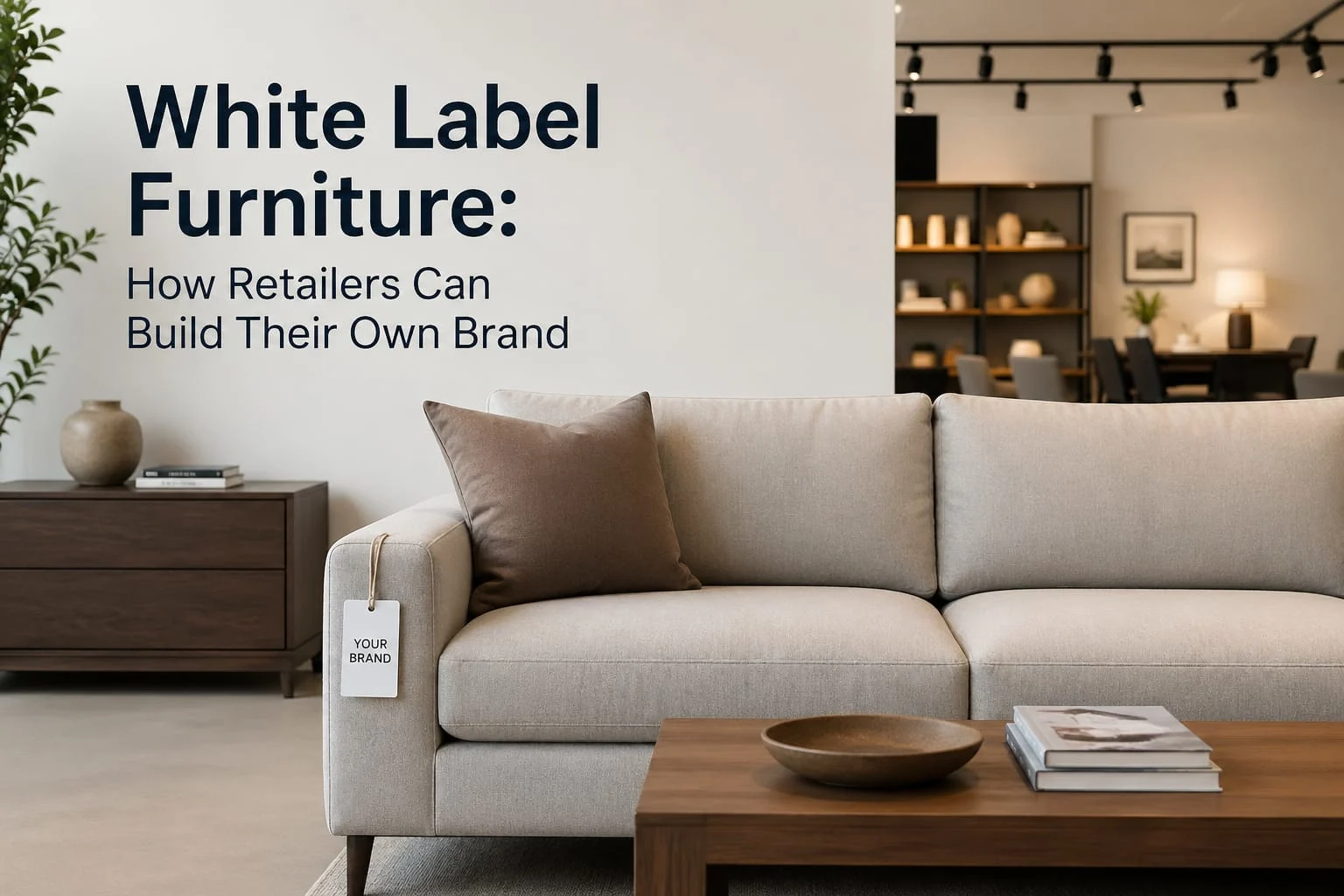
Building a furniture brand from scratch used to mean one thing—heavy investment in manufacturing, design teams, and infrastructure. Today, that’s no longer the case, with white label furniture, retailers can launch their own branded product line without owning a factory. This model is changing how modern businesses operate, especially in the wholesale furniture and bulk supply space.
If you're a retailer, distributor, or eCommerce seller looking to grow, white labeling offers a practical path to build a brand, increase margins, and stand out in a crowded market.
Let’s break down how it works and how you can use it to your advantage.
What Is White Label Furniture?
White label furniture is a business model where a furniture manufacturer produces products without branding, allowing another company to sell them under its own brand name.
In simple terms:
- The manufacturer makes the product
- You add your brand identity
- You sell it as your own
This is widely used in wholesale furniture in bulk, where retailers want to create a unique identity without managing production.
White Label vs Private Label Furniture
Feature | White Label Furniture | Private Label Furniture |
Definition | Standard furniture designs produced by a manufacturer and sold by multiple retailers under different brand names | Customized furniture designs created specifically for one brand and not shared with others |
Exclusivity | Non-exclusive (same product can be sold by multiple sellers) | Exclusive to a single brand |
Customization Level | Limited (basic changes like finish, color, or packaging) | High (design, size, material, and features can be customized) |
Time to Market | Faster (ready designs available) | Slower (requires design and development process) |
Investment Required | Lower initial investment | Higher investment due to customization and development |
Brand Identity | Moderate differentiation | Strong brand identity and uniqueness |
Production Complexity | Simple and standardized | More complex due to customization |
Best For | Retailers starting out or testing new markets | Established brands looking to stand out and build a premium identity |
Risk Level | Lower risk | Higher risk but higher long-term reward |
Scalability | Easy to scale quickly | Scalable but requires planning and development time |
Why Retailers Are Choosing White Label Furniture
The demand for white label furniture is growing rapidly, especially among businesses that want to scale without high risk.
Here’s why:
1. Build Your Own Brand Without Manufacturing
One of the biggest advantages of white label furniture is that you don’t need to invest in factories, machinery, or a production team. A reliable furniture manufacturer takes care of the entire production process—from sourcing materials to finishing the final product. This allows you to focus on branding, marketing, and sales instead of managing operations.
2. Higher Profit Margins
When you sell products under your own brand, you’re not competing only on price. Branded furniture gives you the flexibility to position your products as premium or value-driven, which helps you maintain better margins compared to generic wholesale furniture. Over time, your brand itself adds value to the product.
3. Faster Market Entry
Launching a new product line becomes much quicker with white labeling. Instead of going through long design and development cycles, you can select from ready-made collections offered by your bulk furniture supplier and bring products to market faster. This speed gives you an edge, especially in trend-driven markets.
4. Scalability
As your business grows, your supplier can scale production based on your demand. If you start with small quantities or move into large bulk orders, a capable manufacturer ensures you can expand without changing your sourcing strategy. This makes growth smoother and more predictable.
5. Brand Control
White labeling gives you full control over how your products are presented in the market. From packaging and logo placement to product naming and positioning, everything reflects your brand identity. This helps you stand out, build recognition, and create a stronger connection with your customers.
How White Label Furniture Works (Step-by-Step)
Understanding the process of white label furniture makes it much easier to plan and execute your brand strategy. From selecting products to selling under your own name, each step plays a key role in building a successful retail business.
1. Choose a Reliable Manufacturer
The first step is to partner with an experienced white label furniture supplier or furniture exporter. This decision is critical because your supplier will directly impact product quality, consistency, and delivery timelines. Look for a manufacturer with proven experience in bulk furniture supply, strong communication, and a clear production process.
Read More: Furniture Manufacturers in India
2. Select Product Designs
Once you finalize your supplier, the next step is to choose products from their existing catalog. Selecting ready designs helps you save time and allows you to focus on what sells best in your target market.
3. Customize the Product
Even with ready designs, you usually have the option to make adjustments based on your brand and customer preferences. Depending on the supplier, you can customize details like finishes, colors, materials, and dimensions. This step helps you create a slightly unique product without going into full custom manufacturing.
4. Add Your Branding
This is where the product becomes truly yours. You can apply your brand identity through logo placement, packaging design, labels, and product naming. Strong branding makes your furniture stand out in the market and helps build long-term customer recognition.
5. Place Bulk Order
After finalizing the product and branding details, you place a bulk furniture order for production. At this stage, the manufacturer begins production based on agreed specifications, timelines, and quantities. Clear communication here ensures smooth execution.
6. Delivery & Selling
Once production is complete, the products are packed and shipped to your location. After receiving the inventory, you can start selling under your brand through retail stores, online platforms, or distribution channels. At this point, your white label furniture is fully ready for the market.
Why Wooden Furniture Works Best for White Label Brands
In the global market, wooden furniture wholesale continues to dominate.
Retailers prefer wooden furniture because:
- It offers durability and long lifespan
- It fits both modern and classic interiors
- It has higher perceived value
- It attracts premium buyers
Materials like mango wood, acacia wood, and engineered wood are especially popular for bulk furniture supply.
What to Look for in a White Label Furniture Supplier
Choosing the right white label furniture supplier is not just a sourcing decision—it’s a branding decision. Since the products will carry your name, the supplier you choose will directly impact how customers perceive your business.
1. Product Quality Consistency
Consistency is the foundation of any successful brand. Every product you receive should match the same standards in finish, color, structure, and durability. Even small variations can affect customer trust, especially when you’re selling in bulk. A reliable supplier follows strict quality control processes to ensure uniformity across every order.
2. Customization Flexibility
White labeling works best when you can add your own identity to the product. A good supplier should allow flexibility in areas like finishes, colors, dimensions, and branding elements such as labels and packaging. This helps you differentiate your products in the market without going through full custom manufacturing.
3. Export Experience
If you’re planning to sell in international markets, working with an experienced furniture exporter becomes essential. Export-ready suppliers understand how to handle packaging, documentation, and shipping requirements for different countries. This reduces the risk of delays, damage, or compliance issues during transit.
4. Bulk Production Capacity
As your brand grows, your demand will increase, and your supplier must be ready to scale with you. The ability to handle larger bulk furniture orders without compromising on quality or delivery timelines is essential for long-term success. Working with an experienced manufacturer like Vandana International ensures a scalable production setup, so you can expand your business confidently without the need to change suppliers as your order volume increases.
5. Clear Communication
Smooth communication keeps everything on track. Your supplier should be transparent about pricing, timelines, and production processes. Regular updates, quick responses, and clarity at every stage help avoid confusion and make long-term collaboration easier.
A dependable supplier doesn’t just manufacture products—they become a key part of your brand’s growth journey. Choosing the right one early gives you a strong advantage in building a successful white label furniture business.
Conclusion
White label furniture gives retailers a smart and practical way to build their own brand without the heavy investment of manufacturing. By working with the right furniture manufacturer, you can focus on branding, marketing, and sales while production is handled professionally in the background. The key to success lies in choosing a reliable partner who can deliver consistent quality, customization, and scalable supply, with the right strategy and supplier, white labeling can turn a simple product line into a strong, recognizable brand in the market.
You Can Also Read More About: Where to Buy Wholesale Furniture in Bulk for Retail Business
FAQs
1. What is white label furniture?
White label furniture is produced by a manufacturer and sold by retailers under their own brand name.
2. Is white label furniture a good business model?
Yes, it allows retailers to build a brand without investing in manufacturing, making it cost-effective and scalable.
3. What is the difference between white label and private label furniture?
White label uses ready designs, while private label involves more customization and exclusivity.
4. Can I customize white label furniture?
Yes, most suppliers allow changes in finishes, colors, sizes, and branding elements.
5. How do I choose the right white label furniture supplier?
Look for quality consistency, customization options, export experience, and production capacity.
6. What is the minimum order quantity for white label furniture?
It varies by supplier, but typically starts from 20–100 units depending on the product.