


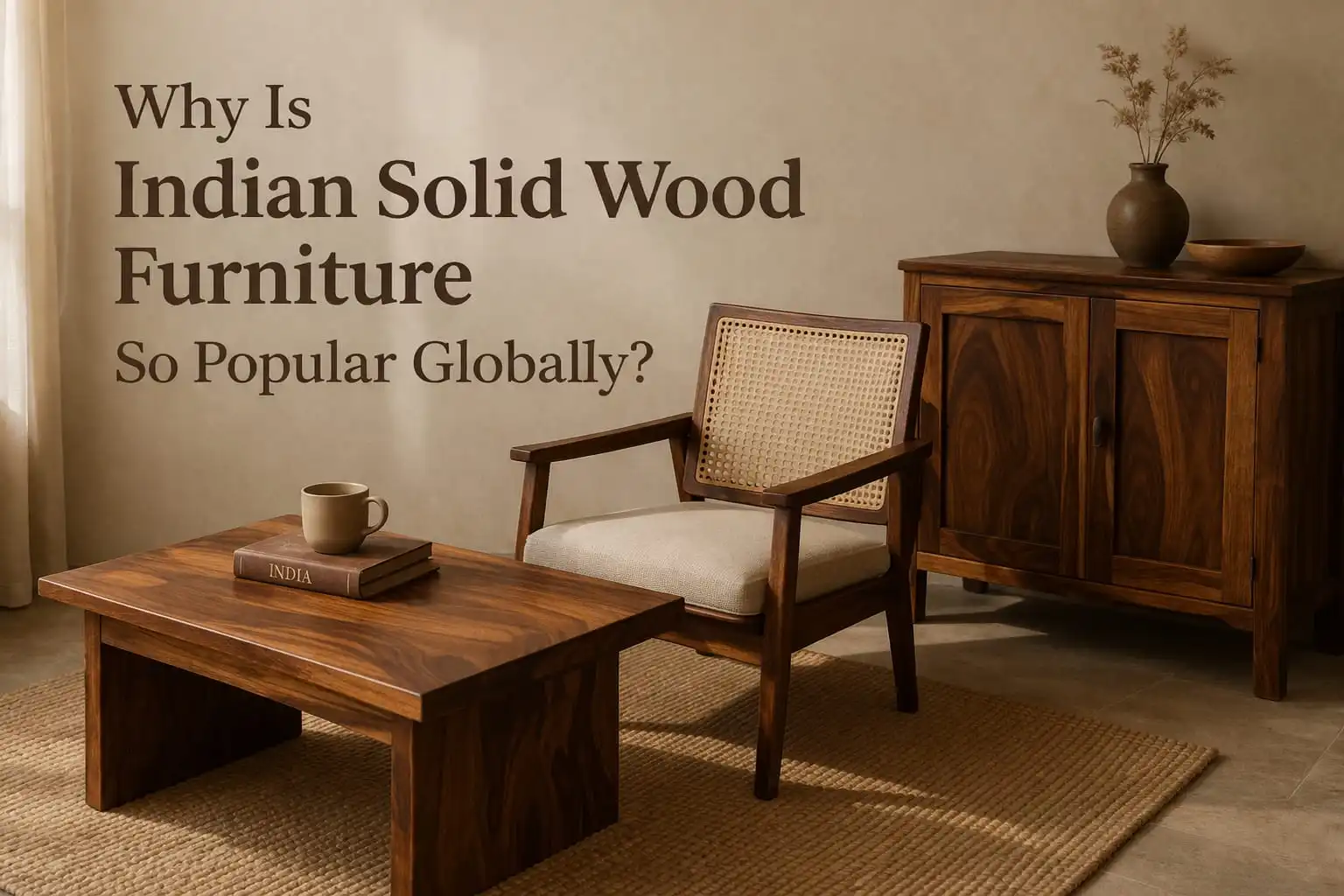
Over the last decade, one trend has become very clear in the global furniture market — Indian solid wood furniture is in high demand across international markets. From large retailers to interior project buyers, businesses across the US, UK, Europe, and Australia continue to source furniture from India. This isn’t just about pricing or availability. It’s about the combination of craftsmanship, material quality, scalability, and reliability that Indian manufacturers offer.
So what exactly makes Indian solid wood furniture so popular worldwide? Let’s break it down in a practical way.
Reasons Why Indian Solid Wood Furniture Is Popular Globally
1. Strong Craftsmanship Backed by Experience
One of the biggest reasons behind the global demand is craftsmanship. India has a long history of woodworking, especially in regions known for furniture manufacturing. Skilled artisans and trained workers bring years of hands-on experience, which reflects in the detailing, finishing, and overall build quality.
For global buyers, this means:
- Better finishing and detailing
- Consistent product quality
- Strong construction for long-term use
- Ability to handle both handmade and machine-based production
This balance between traditional skills and modern manufacturing gives Indian furniture a unique edge.
2. Wide Availability of Solid Wood Materials
India offers a wide variety of solid woods used in furniture manufacturing. This gives buyers flexibility in choosing materials based on their market needs.
Common options include:
- Mango wood (cost-effective and sustainable)
- Sheesham wood (strong and premium)
- Acacia wood (durable and versatile)
- Reclaimed wood (eco-friendly and unique)
For furniture manufacturers in India, this variety allows them to create different product lines — from budget-friendly collections to premium furniture ranges. For buyers, it means more options without needing to source from multiple countries.
3. Competitive Pricing Without Compromising Quality
Pricing is one of the biggest advantages when sourcing from India. Compared to many other manufacturing countries, India offers a strong balance between cost and quality. Labor costs, material availability, and production efficiency allow manufacturers to produce solid wood furniture at competitive prices.
For buyers, this leads to:
- Better profit margins
- Competitive pricing in retail markets
- Cost-effective bulk sourcing
- Higher value for money
This is one of the key reasons why furniture exporters in India continue to attract global buyers.
4. Strong Export Ecosystem and Global Experience
India is not new to furniture exports. Over the years, manufacturers have built strong systems to handle international orders efficiently.
Export-ready suppliers understand:
- Packaging standards for long-distance shipping
- Moisture control for wooden furniture
- Documentation and compliance requirements
- Shipping terms like FOB, CIF, etc.
For buyers, this reduces operational risk and ensures smoother transactions. Working with experienced exporters means fewer surprises and better reliability.
5. Customization at Scale
Customization is a major factor in furniture sourcing, especially for businesses targeting different markets. Indian manufacturers are known for their flexibility when it comes to product development. Whether it’s changing dimensions, finishes, or designs, customization is often part of the process.
This allows buyers to:
- Develop exclusive product collections
- Adapt designs for specific markets
- Maintain brand identity
- Test new styles without major risk
For bulk buyers, this level of flexibility is a big advantage.
6. Ability to Handle Bulk Orders Efficiently
Scalability is critical for businesses dealing in large volumes. Many bulk furniture suppliers in India have the capacity to handle container-level orders and repeat shipments. Structured production setups ensure consistency across large batches.
This helps buyers:
- Maintain steady inventory
- Meet market demand without delays
- Plan long-term sourcing
- Scale their business smoothly
Consistency in bulk production is one of the main reasons buyers stick with Indian suppliers.
7. Growing Focus on Sustainability
Sustainability is becoming a key factor in global sourcing decisions. Indian furniture manufacturers are using eco-friendly materials like mango wood and reclaimed wood. Also follow responsible sourcing practices to meet international expectations.
For buyers, this adds value in terms of:
- Eco-friendly branding
- Meeting sustainability standards
- Attracting conscious consumers
- Aligning with global market trends
This shift is making Indian furniture even more relevant in modern markets.
8. Versatile Design Options
Indian furniture is no longer limited to traditional styles. Today, manufacturers produce a wide range of designs, including:
- Modern and minimalist furniture
- Rustic and industrial styles
- Contemporary and mixed-material designs
- Handcrafted and artisanal collections
This versatility allows buyers to target multiple market segments without changing suppliers. It also helps in adapting quickly to changing design trends.
9. Reliable Supply Chain for Long-Term Sourcing
Consistency is one of the biggest concerns in international sourcing. Indian suppliers, especially experienced exporters, focus on building long-term relationships. This includes maintaining quality, meeting timelines, and ensuring smooth communication.
For buyers, this results in:
- Reliable repeat orders
- Better coordination
- Reduced sourcing risks
- Stronger business relationships
Over time, this reliability becomes more valuable than just pricing.
10. Strong Global Demand and Market Trust
Indian solid wood furniture has already built a strong presence in global markets. Buyers across different regions trust Indian suppliers because of their proven track record. Many businesses continue to source from India for years, creating stable trade relationships.
This trust is built on:
- Consistent quality
- Competitive pricing
- Reliable delivery
- Strong communication
Once a supplier proves reliable, buyers rarely switch — and that’s a big advantage for Indian exporters.
Why You Should Choose the Right Export Partner
India offers many advantages, but the final outcome largely depends on the supplier you choose. Working with an experienced exporter ensures that every stage — from material selection to production and final shipment — is handled efficiently and professionally.
At Vandana International, the focus is on manufacturing and exporting solid wood furniture specifically for international markets. With a structured production process and experience in bulk orders, the company ensures consistency, quality, and reliable delivery.
- Export-focused manufacturing approach
- Strong quality control across production
- Customization based on buyer requirements
- Secure packaging for global shipping
- Consistent supply for large orders
For buyers, this makes sourcing more efficient and predictable.
Final Conclusion
Indian solid wood furniture has earned its global reputation because it delivers the right mix of quality, pricing, design flexibility, and reliability. For businesses sourcing furniture in bulk, it offers a practical and scalable solution that supports both short-term sales and long-term growth. From skilled craftsmanship and material availability to export experience and customization, India provides a complete ecosystem for furniture sourcing. This makes it easier for buyers to manage production, maintain consistency, and meet market demands efficiently. Indian solid wood furniture becomes a strong foundation for building a successful business in global markets.
Read More About: Should You Buy Furniture Directly from Manufacturers or Through Traders?
FAQs
1. Why is Indian solid wood furniture so popular worldwide?
Indian solid wood furniture is popular due to its craftsmanship, durability, competitive pricing, and strong export capabilities. It offers a balance of quality and affordability that appeals to global buyers.
2. What types of wood are commonly used in Indian furniture?
Commonly used woods include mango wood, sheesham wood, acacia wood, and reclaimed wood, each suited for different pricing and product segments.
3. Is Indian furniture good for bulk sourcing?
Yes, many manufacturers in India specialize in bulk production and can handle large orders with consistent quality and reliable timelines.
4. Is Indian solid wood furniture durable?
Yes, solid wood furniture from India is known for its strength and durability, especially when made from hardwoods like sheesham and acacia.
5. Why do global buyers prefer Indian furniture exporters?
Buyers prefer Indian exporters because of their experience in handling international orders, including packaging, documentation, and logistics.
6. How can businesses choose the right furniture supplier in India?
The best approach is to evaluate the supplier’s production setup, quality standards, export knowledge, and ability to handle bulk orders consistently.