


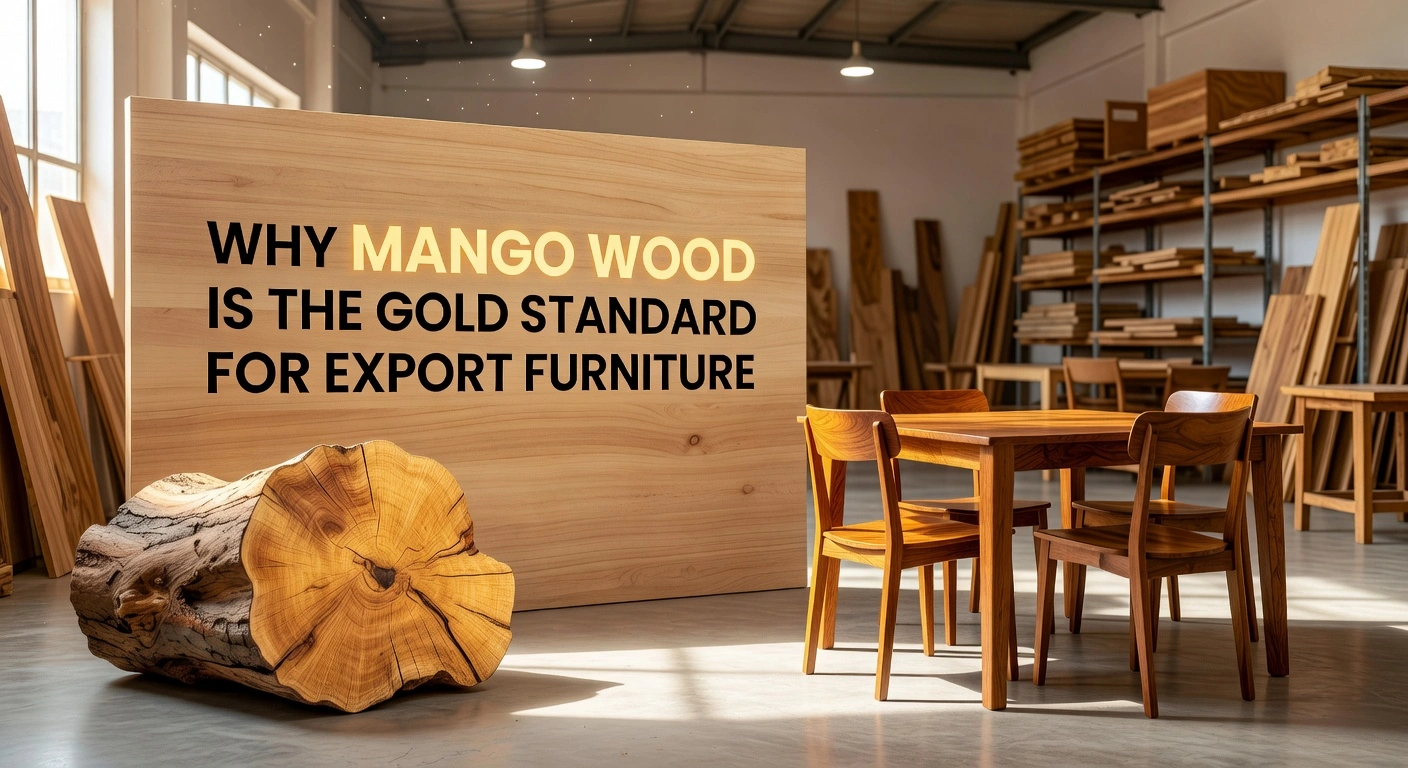
When sourcing wooden furniture for international markets, the choice of material plays a critical role in both product quality and long-term business success. Among the various hardwood options available in India, mango wood has gained strong attention in recent years — especially among global buyers looking for cost-effective and sustainable solutions.
But the real question for importers and bulk buyers is: is mango wood actually suitable for export furniture?
The answer is not just a simple yes or no. It depends on how the wood is processed, the type of furniture being produced, and the expectations of your target market. In this guide, we’ll break down everything B2B buyers need to know about mango wood furniture from India, including its advantages, limitations, and export suitability.
What is Mango Wood?
Mango wood is a hardwood derived from mango trees that are primarily grown for fruit. Once the tree completes its fruit-bearing lifecycle, the wood is harvested and used for furniture manufacturing. This makes mango wood a by-product of agriculture, which is one of the reasons it is considered a sustainable material in the global furniture industry.
For buyers sourcing from furniture manufacturers in India, mango wood has become a widely available and practical option due to its abundance and versatility.
Is Mango Wood Suitable for Export Furniture?
Yes — mango wood is a practical and reliable choice for export furniture, especially when it is used in the right product categories and processed according to international standards. For B2B buyers, the suitability of mango wood depends less on the material itself and more on how well it is sourced, treated, and manufactured.
When handled by experienced furniture manufacturers in India, mango wood can deliver a strong balance of cost, durability, and design flexibility — making it highly suitable for global markets.
For B2B buyers, it works best when:
1. Used for indoor furniture collections
Mango wood performs best in indoor applications such as cabinets, tables, and storage units. It offers reliable durability for everyday use, making it ideal for residential and commercial indoor spaces in international markets.
2. Sourced from experienced manufacturers
The quality of mango wood furniture depends heavily on the manufacturer. Working with experienced exporters ensures proper material selection, skilled craftsmanship, and consistent production standards across bulk orders.
3. Properly seasoned and treated for export
To perform well during long-distance shipping, mango wood must be correctly seasoned and treated for moisture control and pest resistance. This prevents issues like cracking, warping, or damage during transit.
4. Designed for cost-conscious and design-focused markets
Mango wood is well-suited for markets that value affordability along with aesthetic appeal. Its natural grain and ability to adapt to different finishes make it ideal for a wide range of design styles without increasing costs.
5. Used in scalable production for bulk orders
Due to its availability and ease of manufacturing, mango wood supports large-scale production. This makes it a strong option for B2B buyers who need consistent supply and efficient bulk sourcing
Many wholesale furniture suppliers in India successfully export mango wood furniture to global markets because it offers the right mix of affordability, versatility, and production scalability.
Key Advantages of Mango Wood Furniture
1. Cost-Effective for Bulk Production
One of the biggest reasons mango wood is widely used in export furniture is its affordability compared to premium hardwoods like teak or sheesham. For B2B buyers sourcing in large volumes, cost plays a critical role in overall profitability. Mango wood allows businesses to maintain quality while keeping production costs under control, making it a practical choice for large-scale manufacturing and export.
This makes it easier to:
- Reduce overall sourcing cost per unit
- Improve profit margins in competitive markets
- Furnish large spaces within controlled budgets
- Support bulk orders without increasing costs significantly
- Offer competitively priced products in international markets
2. Sustainable and Eco-Friendly Material
Sustainability has become a major factor in global furniture sourcing, especially in markets like Europe and the US. Mango wood stands out as an eco-friendly option because it is sourced from trees that have completed their fruit-bearing lifecycle, making it a responsible use of natural resources.
This adds value by:
- Supporting sustainable sourcing practices
- Reducing dependency on freshly cut hardwood trees
- Utilizing agricultural by-products efficiently
- Aligning with global environmental standards
- Strengthening brand positioning in eco-conscious markets
3. Good Strength and Durability
Mango wood is classified as a hardwood, which means it offers a good level of strength for everyday furniture use. While it may not match the density of some premium woods, it provides reliable durability for most indoor furniture categories.
This makes it suitable for:
- Cabinets, storage units, and shelving
- Coffee tables and side tables
- Decorative and occasional furniture
- Medium-load furniture applications
- Long-term indoor use with proper care
4. Attractive Natural Grain and Finish
One of the key selling points of mango wood is its natural grain pattern. Each piece has a unique texture and variation, which enhances the overall visual appeal of the furniture. This makes it highly desirable in markets that value design and aesthetics.
This helps you to:
- Offer visually unique furniture pieces
- Create rustic, industrial, or modern designs
- Add character to handcrafted collections
- Appeal to design-focused customers
- Increase perceived product value without higher cost
5. Easy to Work With for Customization
For furniture manufacturers in India, mango wood is relatively easy to cut, shape, and finish, making it ideal for customized production. This is a major advantage for B2B buyers who need flexibility in design and product development.
This allows you to:
- Develop customized designs based on market needs
- Modify dimensions, finishes, and materials
- Experiment with different styles and concepts
- Create exclusive product collections
- Maintain consistency across customized bulk orders
Limitations of Mango Wood for Export Furniture
While mango wood offers several advantages for export furniture, it’s equally important for B2B buyers to understand its limitations. This helps in making better sourcing decisions and choosing the right material based on product type, usage, and target market requirements.
1. Not Ideal for Heavy-Duty Furniture
Although mango wood is a hardwood, it is not as dense or strong as premium options like teak or sheesham. For furniture that requires high load-bearing capacity or long-term heavy use, other hardwoods may be a better choice.
This can impact:
- Suitability for heavy-use furniture like large beds
- Performance in high-load dining tables
- Long-term durability under constant stress
- Use in commercial or heavy-duty applications
- Buyer expectations in premium segments
2. Requires Proper Treatment and Seasoning
For export-quality furniture, mango wood must be properly processed before manufacturing. This includes seasoning, moisture control, and pest treatment. Without these steps, the wood may not perform well during international shipping or long-term use.
This makes it important to:
- Ensure proper wood seasoning before production
- Maintain controlled moisture levels
- Apply anti-pest and protective treatments
- Prevent cracking or warping during transit
- Work with experienced furniture exporters in India
3. Limited Outdoor Use
Mango wood is primarily suitable for indoor furniture. It does not naturally withstand extreme weather conditions such as heavy rain, humidity, or direct sunlight unless specially treated.
This means:
- It is best used for indoor furniture applications
- Not ideal for outdoor or garden furniture
- Requires additional treatment for exterior use
- May not perform well in harsh climates
- Alternative woods like teak are preferred for outdoor use
Mango Wood vs Sheesham Wood: Which is Better?
This is a common comparison among buyers sourcing furniture from India, especially when balancing cost, durability, and market positioning.
Factor | Mango Wood | Sheesham Wood |
Cost | More affordable, ideal for bulk production | Higher cost due to premium quality |
Sustainability | Eco-friendly, sourced from fruit-bearing trees | Less sustainable compared to mango wood |
Durability | Good for everyday indoor use | Stronger and more durable for heavy-duty use |
Design Flexibility | Highly versatile, suitable for multiple styles | More traditional, premium finish appeal |
Best Use Case | Mid-range furniture and design-focused markets | Premium furniture and high-load applications |
Target Buyers | Retailers, wholesalers, and project buyers with budget focus | Buyers targeting high-end or luxury segments |
For B2B buyers, the right choice depends on your target market, pricing strategy, and product category. Mango wood works well for scalable, cost-efficient collections, while sheesham wood is better suited for premium and heavy-duty furniture segments.
Working with the Right Export Partner
For global buyers, sourcing the right material is only one part of the process. The real difference comes from working with a supplier who understands export standards and manages production efficiently from start to finish.
At Vandana International, the focus is on manufacturing and exporting furniture specifically for international markets. With strong experience in handling bulk orders, the company ensures that materials like mango wood are properly processed, finished, and packed to meet global expectations.
This approach ensures:
- Export-focused manufacturing approach
Every product is developed keeping international quality standards, market preferences, and export requirements in mind. - Strong quality control at every stage
From raw material selection to final finishing, each stage is carefully monitored to maintain consistency across bulk orders. - Customization based on market requirements
Products can be tailored in terms of design, size, finish, and material to match specific buyer needs and target markets. - Reliable packaging for international shipping
Secure and export-grade packaging is used to protect furniture during long-distance transit and reduce the risk of damage. - Consistent supply for bulk buyers
Structured production systems ensure timely delivery and the ability to handle repeat and large-volume orders efficiently.
This makes sourcing smoother, more predictable, and more reliable for importers, retailers, and project buyers working in global markets.
Final Thoughts
Mango wood has become one of the most practical choices for export furniture from India. It offers a unique combination of affordability, sustainability, and design flexibility — making it ideal for a wide range of international markets.
For wholesale buyers, the main concern is not just choosing the right material, but sourcing it from the right manufacturer. When processed correctly and used in suitable applications, mango wood furniture can deliver strong value, consistent quality, and long-term business potential. If your goal is to balance cost, design, and scalability, mango wood is definitely worth considering in your sourcing strategy.
FAQs
1. Is mango wood good for export furniture?
Yes, mango wood is a reliable option for export furniture when it is properly seasoned and treated. It offers a good balance of affordability, durability, and design flexibility, making it suitable for bulk production.
2. Why do furniture exporters in India use mango wood?
Many furniture exporters in India prefer mango wood because it is widely available, cost-effective, and easy to work with. It also supports sustainable sourcing, which is important in global markets.
3. Is mango wood durable enough for long-term use?
Mango wood is a hardwood with good strength for indoor furniture. While it may not be as strong as teak or sheesham, it performs well for everyday use when properly manufactured.
4. Is mango wood a sustainable material for furniture?
Yes, mango wood is considered eco-friendly because it is harvested after the tree completes its fruit-bearing lifecycle. This makes it a sustainable choice for global buyers.
5. What are the limitations of mango wood furniture?
Mango wood is not ideal for heavy-duty or outdoor furniture unless specially treated. It also requires proper seasoning and moisture control to avoid issues during export.
What should B2B buyers check before sourcing mango wood furniture?
Buyers should check wood seasoning, finishing quality, packaging standards, and the manufacturer’s export experience to ensure consistent quality in bulk orders.